ydroelectric power remains one of the most sustainable and widely used sources of renewable energy worldwide. Among the various turbine technologies, the Kaplan turbine is particularly suited for low-head, high-flow applications. A specialized variation of this design—the S-type Kaplan turbine—has gained attention for its compact structure and high efficiency in small to medium-scale hydroelectric power stations.
What is an S-Type Kaplan Turbine?
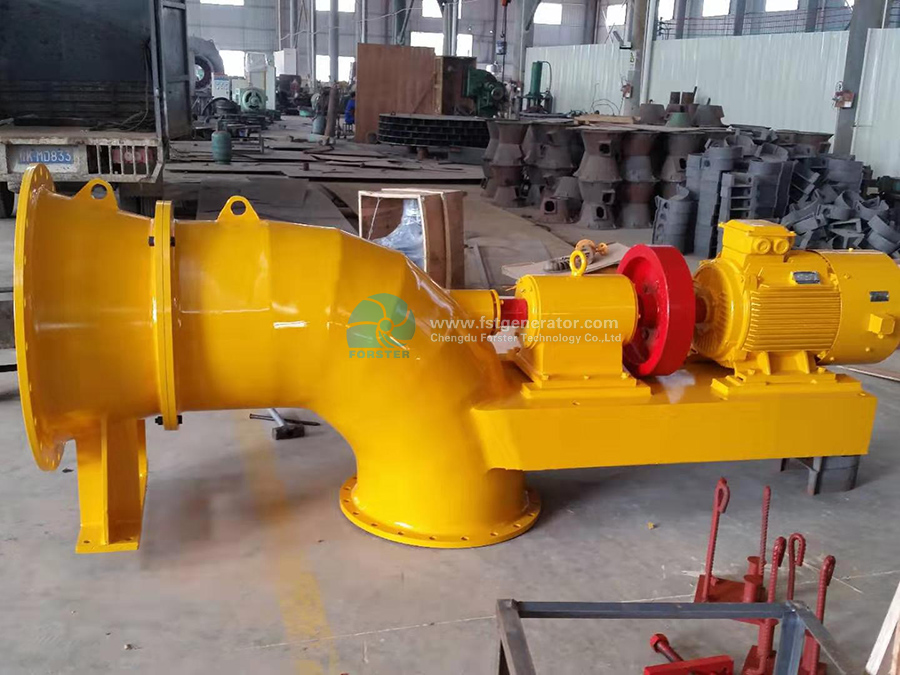
The S-type Kaplan turbine is a horizontal-axis variant of the traditional Kaplan turbine. It is named after its S-shaped water passageway, which redirects the flow from a horizontal direction through a scroll casing to the turbine runner and finally out through the draft tube. This S-shape allows for a compact design that requires less civil engineering work compared to vertical-axis installations.
The Kaplan turbine itself is a propeller-type turbine with adjustable blades and wicket gates. This feature allows it to maintain high efficiency across a wide range of flow conditions and water levels—making it ideal for rivers and canals with variable flow rates.
Design and Operation
In an S-type Kaplan turbine power plant, water enters the turbine horizontally and passes through adjustable guide vanes (wicket gates) that direct the flow to the runner. The runner blades, also adjustable, are optimized in real-time to respond to changing water conditions. This dual-adjustability is known as the “double regulation” system, which maximizes efficiency.
The generator is typically housed in a bulb or pit type casing, located along the same horizontal axis as the turbine. This integrated design makes the entire unit compact, easier to maintain, and suitable for shallow installations.
Advantages of S-Type Kaplan Turbines
High Efficiency in Low-Head Sites: Ideal for heads between 2 to 20 meters and high flow rates, making it suitable for rivers, irrigation canals, and run-of-river applications.
Compact Design: Horizontal orientation and minimal civil works reduce installation costs and environmental impact.
Flexible Operation: Capable of operating efficiently under varying flow conditions due to adjustable runner blades and guide vanes.
Low Maintenance: The horizontal layout allows easier access to mechanical parts, reducing maintenance time and costs.
Eco-Friendly: Often used in fish-friendly designs and equipped with features that minimize ecological disruption.
Applications and Examples
S-type Kaplan turbines are widely used in small and medium-scale hydro projects, particularly in Europe and Asia. They are popular in retrofitting old mills and dams or in constructing new run-of-river plants. Many manufacturers, including Voith, Andritz, and GE Renewable Energy, produce modular S-type Kaplan units tailored for different site conditions.
Conclusion
The S-type Kaplan turbine hydroelectric power plant presents an innovative and efficient solution for low-head power generation. With its adaptable design, environmental compatibility, and cost-effective installation, it plays a crucial role in the global transition toward clean and renewable energy sources.
Post time: Apr-29-2025
