Introduction to Microcomputer Control Panels in Hydropower Plants
Microcomputer control panels represent a significant technological advancement in the operation and management of modern hydropower plants. These integrated systems serve as the central nervous system, enabling automated, precise, and efficient control of the entire power generation process. Replacing traditional relay-based control systems, they have become indispensable for ensuring safety, reliability, and optimal performance.
Core Functions and Features
The primary role of a microcomputer control panel is to monitor and regulate the key components of a hydropower unit, including the turbine, generator, governor, exciter, and auxiliary systems. Its core functions encompass:
Automated Control: It executes automatic sequences for crucial operations such as unit start-up, synchronization with the grid, load adjustment, and shut-down. This minimizes human error and ensures consistent procedures.
Real-time Monitoring: The panel continuously acquires data from a vast network of sensors throughout the plant. Parameters like turbine speed, generator voltage and current, winding temperature, oil pressure, and vibration levels are displayed in real-time on a Human-Machine Interface (HMI).
Protection and Alarms: The integrated protection system constantly analyzes incoming data. Upon detecting any abnormality (e.g., overcurrent, overspeed, overtemperature), it triggers immediate alarms for operators and can automatically initiate shutdown procedures to prevent severe equipment damage.
Data Logging and Analysis: These systems record all operational and event data, creating comprehensive historical logs. This information is crucial for performance analysis, predictive maintenance, troubleshooting, and generating reports.
Human-Machine Interface (HMI): A color graphical display (touchscreen or with keyboards) provides operators with an intuitive overview of the plant’s status. Mimic diagrams, trend curves, and alarm lists allow for easy interaction and informed decision-making.
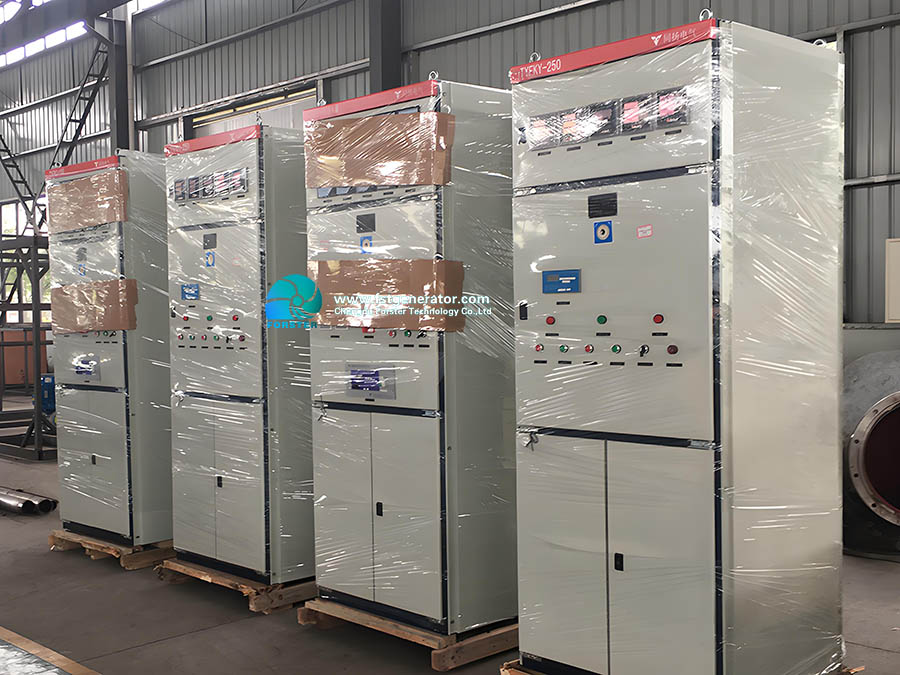
Hardware and Software Components
A typical microcomputer control panel consists of:
Programmable Logic Controllers (PLCs) / Industrial PCs: These are the robust industrial-grade computers that form the core processing units, executing the control logic.
Protection Relays: Intelligent electronic devices (IEDs) dedicated to safeguarding specific equipment like the generator or transformer.
Sensors and Transducers: Devices that measure physical parameters (pressure, temperature, flow, level) and convert them into standardized electrical signals for the control system.
Communication Modules: Enable integration into broader plant networks and Supervisory Control and Data Acquisition (SCADA) systems, allowing for remote monitoring and control from a central control room.
Redundant Power Supplies: Ensure uninterrupted operation even if one power source fails.
The software is based on specialized programming languages (like those defined in the IEC 61131-3 standard) and is configured to implement the specific control and protection algorithms for the hydropower unit.
Advantages over Conventional Systems
The adoption of microcomputer control panels offers substantial benefits:
Enhanced Reliability and Safety: Automated protection functions react faster than human operators, significantly reducing the risk of catastrophic failures.
Improved Efficiency: Optimal control of the turbine and generator ensures maximum energy conversion efficiency across varying water flows and load demands.
Reduced Operational Costs: Automation reduces the need for constant manual oversight. Predictive maintenance capabilities, based on data trends, help avoid costly unplanned downtime.
Flexibility and Scalability: Control logic can be easily modified through software updates to adapt to changing requirements or optimize processes, without the need for rewiring hardware.
Comprehensive Data Management: Easy access to all operational data provides valuable insights for improving plant management and longevity.
Conclusion
Microcomputer control panels are the cornerstone of modern, computerized hydropower plants. By integrating automation, monitoring, and protection into a single, user-friendly system, they empower operators to manage complex processes with high precision and confidence. Their implementation is a critical step towards building smarter, more efficient, and more resilient hydropower facilities for the future energy grid.
Post time: Sep-15-2025
