1. Development History
The Turgo turbine is a type of impulse turbine invented in 1919 by the British engineering company Gilkes Energy as an improved version of the Pelton turbine. Its design aimed to enhance efficiency and adapt to a wider range of heads and flow rates.
1919: Gilkes introduced the Turgo turbine, named after the “Turgo” region in Scotland.
Mid-20th Century: As hydropower technology advanced, the Turgo turbine became widely used in small to medium-sized hydropower plants, particularly excelling in applications with medium heads (20-300 m) and moderate flow rates.
Modern Applications: Today, due to its high efficiency and versatility, the Turgo turbine remains a popular choice for micro-hydro and small to medium-scale hydropower projects.
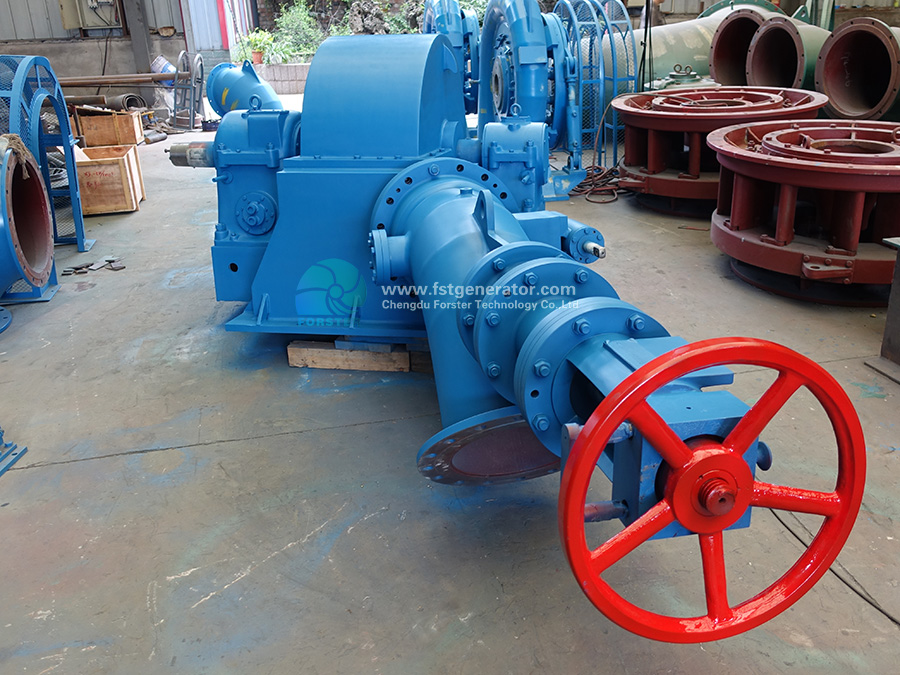
2. Key Features
The Turgo turbine combines some advantages of both the Pelton and Francis turbines, offering the following characteristics:
(1) Structural Design
Nozzle and Runner: Similar to the Pelton turbine, the Turgo uses a nozzle to convert high-pressure water into a high-speed jet. However, its runner blades are angled, allowing water to strike them obliquely and exit from the opposite side, unlike the Pelton’s symmetrical double-sided flow.
Single-Pass Flow: Water passes through the runner only once, reducing energy loss and improving efficiency.
(2) Suitable Head and Flow Range
Head Range: Typically operates within 20–300 m, making it ideal for medium to high heads (between Pelton and Francis turbines).
Flow Adaptability: Better suited for moderate flow rates compared to the Pelton turbine, as its compact runner design allows higher flow velocities.
(3) Efficiency and Speed
High Efficiency: Under optimal conditions, efficiency can reach 85–90%, close to Pelton turbines (90%+) but more stable than Francis turbines under partial loads.
Higher Rotational Speed: Due to the oblique water impact, Turgo turbines generally run at higher speeds than Pelton turbines, making them suitable for direct generator coupling without requiring a gearbox.
(4) Maintenance and Cost
Simple Structure: Easier to maintain than Francis turbines but slightly more complex than Pelton turbines.
Cost-Effective: More economical than Pelton turbines for small to medium-scale hydropower, especially in medium-head applications.
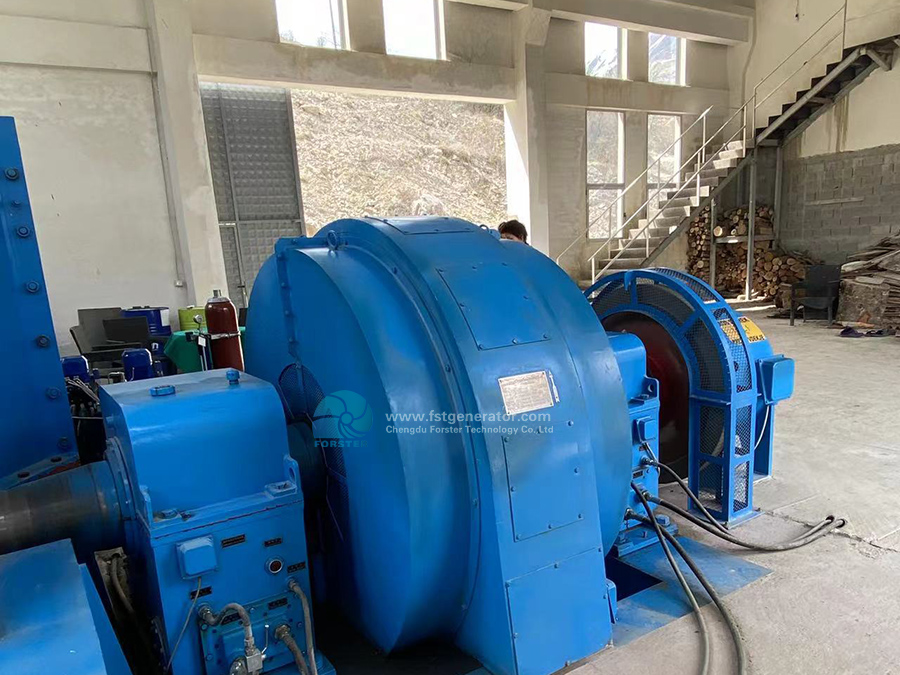
3. Comparison with Pelton and Francis Turbines
Feature Turgo Turbine Pelton Turbine Francis Turbine
Head Range 20–300 m 50–1000+ m 10–400 m
Flow Suitability Moderate flow Low flow Medium-high flow
Efficiency 85–90% 90%+ 90%+ (but drops under partial load)
Complexity Moderate Simple Complex
Typical Use Small/medium hydro Ultra-high-head hydro Large-scale hydro
4. Applications
The Turgo turbine is particularly suitable for:
✅ Small to medium hydropower plants (especially with 20–300 m head)
✅ High-speed direct generator drive applications
✅ Variable flow but stable head conditions
Due to its balanced performance and cost-effectiveness, the Turgo turbine remains a vital solution for micro-hydro and off-grid power systems worldwide.
Post time: Apr-10-2025
