Abstract
The governor system is a critical component in hydropower generation, responsible for regulating turbine speed and active power output in response to grid frequency changes and dispatch commands. The evolution from mechanical-hydraulic to microprocessor-based governors represents a fundamental technological leap, enhancing precision, reliability, and functionality. This article explores the architecture, core technologies, functionalities, and advantages of modern microprocessor-based governors (digital governors) in hydropower applications.
1. Introduction
The primary mission of a hydropower governor is to maintain a stable equilibrium between the mechanical power driving the turbine-generator and the electrical power demanded by the grid. Any imbalance causes speed deviation. Traditional mechanical-hydraulic governors used flyballs and intricate lever systems for sensing and feedback. The advent of microprocessors has transformed these systems into sophisticated digital controllers, enabling advanced control algorithms, seamless integration with plant control systems, and superior dynamic performance.
2. System Architecture
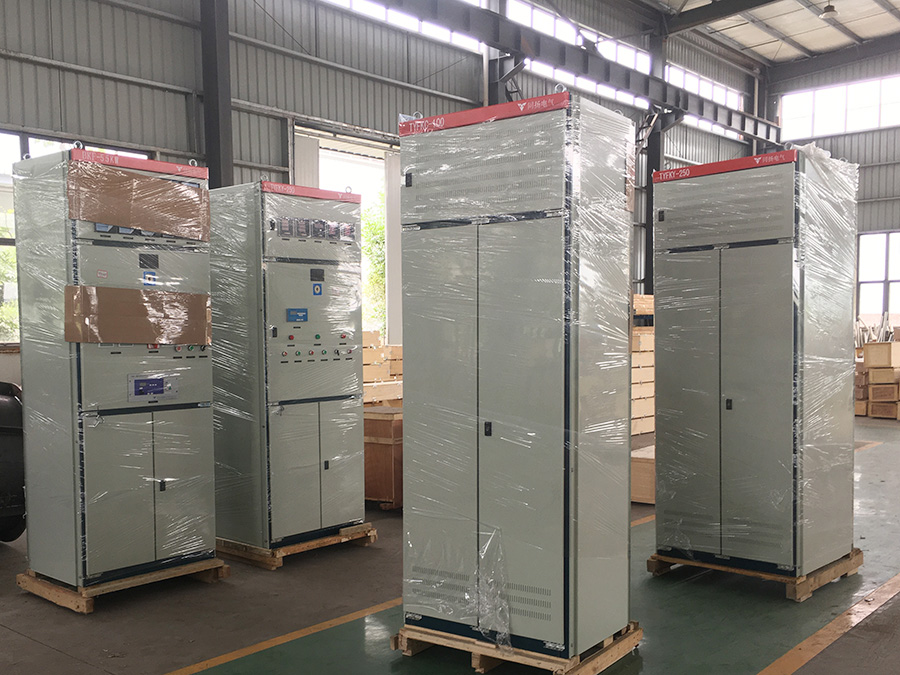
A typical microprocessor-based governor system consists of three main layers:
Control Layer: The core is a high-reliability industrial programmable logic controller (PLC) or a dedicated digital controller. It executes control algorithms, processes inputs, and computes output signals. Redundant controllers (often in hot-standby configuration) are standard for critical plants to ensure uninterrupted operation.
Measurement & Input Layer: This includes sensors for key parameters: turbine speed (measured by magnetic or frequency probes), guide vane or needle position (via position transducers), power output, and grid frequency. It also receives setpoints from the plant’s supervisory control or the grid operator.
Electro-Hydraulic Actuation Layer: The computed digital control signal is converted to an analog signal and amplified by an electro-hydraulic converter (typically a servo or proportional valve). This valve precisely controls hydraulic oil flow to one or more actuators (servo cylinders) that physically move the turbine’s guide vanes, runner blades (in Kaplan turbines), or the needle (in Pelton turbines).
3. Core Control Technology
The digital governor’s intelligence lies in its software-implemented control algorithms.
PID Control: The Proportional-Integral-Derivative algorithm remains the cornerstone. The microprocessor allows for independent, precise, and adaptive tuning of the P, I, and D parameters for different operating modes (e.g., start-up, isolated grid, large grid connection).
Advanced Control Strategies: Modern governors often incorporate more sophisticated techniques:
Adaptive/Fuzzy Logic Control: Adjusts parameters automatically for non-linear turbine characteristics under varying head and flow conditions.
State Feedback Control: Improves stability and response for complex hydraulic systems with long penstocks.
Double-Derivative and Power Feedback: Used to enhance damping during load rejection and transient events.
4. Key Functionalities
Beyond basic speed regulation, digital governors provide comprehensive functions:
Operating Mode Management: Seamless switching between Speed Control (for isolated grids or start-up), Power Control (for grid-connected dispatch), and Water Level/Flow Control (for irrigation or run-of-river schemes).
Start-Up & Shutdown Sequences: Fully automated, programmable sequences for smooth and safe turbine acceleration, synchronization, and stopping.
Protection & Diagnostics: Continuous self-monitoring, fault logging, and protective responses (e.g., fast gate closure on overspeed detection, fallback to backup channels).
Communication & Integration: Support for standard industrial protocols (IEC 61850, Modbus, PROFIBUS) enables seamless integration into the plant’s SCADA (Supervisory Control and Data Acquisition) system and the wider grid control network.
Performance Optimization: Features like Dead Zone Compensation for mechanical friction and Nonlinear Gain adjustment improve control quality across the entire operating range.
5. Advantages over Traditional Systems
The benefits of microprocessor-based governors are substantial:
High Precision & Stability: Digital processing eliminates drift and dead-band associated with mechanical linkages, enabling extremely precise frequency control (±0.1% or better).
Flexibility & Adaptability: Control strategies and parameters are easily modified via software without hardware changes, allowing optimization for specific site conditions.
Enhanced Reliability: Reduced mechanical wear, comprehensive diagnostics, and redundant architecture significantly increase mean time between failures (MTBF).
Advanced Functionality: Enables complex control sequences, ancillary grid services (like fast frequency response), and data logging for performance analysis.
Ease of Maintenance & Testing: Fault diagnosis is simplified, and simulation modes allow for thorough testing without operating the actual turbine.
6. Conclusion
The microprocessor-based governor is the definitive solution for modern hydropower control. It has evolved from a simple regulator into an intelligent, networked control node crucial for plant efficiency, grid stability, and the provision of essential grid services. As renewable energy penetration grows, the fast, accurate, and flexible response of digital governors will become even more vital in maintaining power system inertia and frequency stability. Future developments will likely focus on enhanced cybersecurity, deeper integration with plant-wide digital twins, and more advanced AI-driven predictive control algorithms.
Post time: Dec-11-2025
