In the heart of every hydropower plant, away from the roar of turbines and the immense pressure of penstocks, lies a silent nerve center: the control panel. This sophisticated array of screens, switches, indicators, and controllers is the brain of the entire operation, ensuring that the powerful force of water is converted into reliable electricity safely and efficiently.
The Core Functions
The primary role of the control panel is to provide a centralized interface for monitoring and commanding all critical processes within the plant. Its key functions can be broken down into three main areas:
Monitoring and Data Acquisition: The control panel continuously receives a flood of real-time data from hundreds of sensors throughout the facility. This includes:
Electrical Parameters: Generator output (voltage, current, frequency, power factor), transformer status, and circuit breaker positions.
Mechanical Status: Turbine speed (RPM), wicket gate position, bearing temperatures, and vibration levels.
Hydraulic Conditions: Reservoir and tailrace water levels, dam gate positions, and flow rates in the penstocks.
Control and Operation: From the panel, operators can execute precise commands to manage the power generation process. This includes:
Starting and Stopping turbine-generator units.
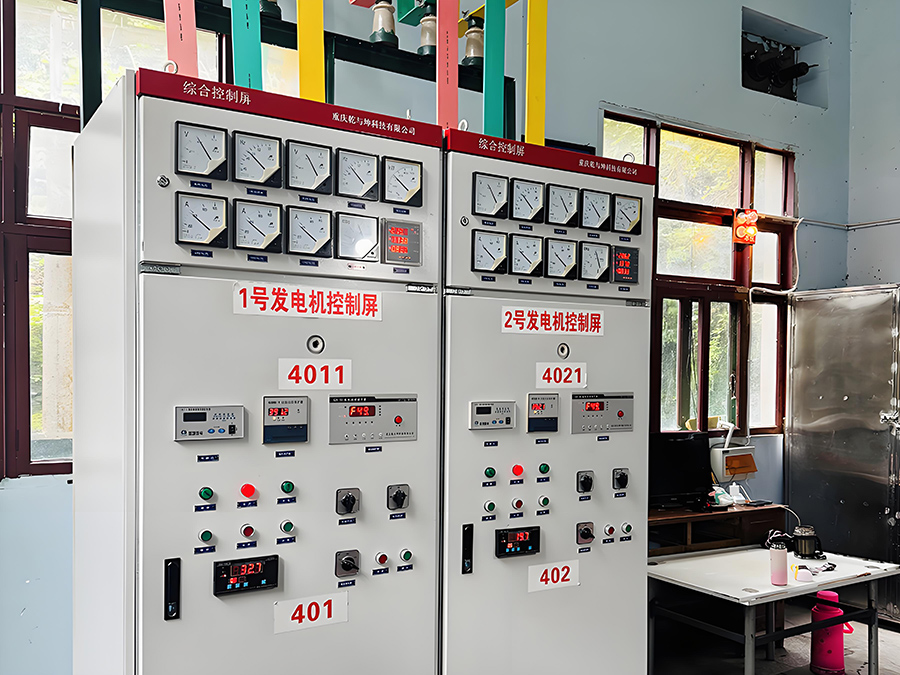
Synchronizing the generator with the electrical grid.
Adjusting the load by controlling the wicket gates to regulate the water flow, matching power output with grid demand.
Operating auxiliary systems such as cooling water pumps, lubrication systems, and compressor units.
Protection and Safety: This is perhaps the most critical function. The control panel is integrated with a robust protection system that automatically triggers alarms and initiates shutdown sequences if any parameter exceeds safe limits. This prevents catastrophic damage to equipment, such as mechanical failure from overspeed or electrical faults.
Key Components of a Modern Control Panel
While traditional control rooms featured vast walls of hard-wired buttons, lamps, and analog gauges, modern panels have evolved significantly:
Human-Machine Interface (HMI): Large, high-resolution touchscreen displays are now the norm. They present dynamic graphical overviews of the entire plant, allowing operators to visualize processes and drill down into specific systems with a touch.
Programmable Logic Controllers (PLCs) and SCADA: These are the intelligent core. PLCs are industrial computers that execute control logic based on input from sensors. They are networked into a Supervisory Control and Data Acquisition (SCADA) system, which provides the central software platform for data logging, historical analysis, and remote control capabilities.
Protection Relays: These dedicated electronic devices guard specific pieces of equipment (generators, transformers). They constantly monitor electrical conditions and can trip circuit breakers within milliseconds to isolate a fault.
Annunciator Panels: These provide immediate, unambiguous visual and audible alerts for critical faults, ensuring operators cannot miss an important alarm even when monitoring multiple screens.
The Evolution: From Analog to Digital
The journey of control panels mirrors the broader technological revolution. Early 20th-century panels were entirely analog, relying on physical relays and intricate wiring. Today, digital systems offer unparalleled advantages:
Enhanced Efficiency: Automated control algorithms optimize performance for maximum energy output.
Improved Diagnostics: Advanced data analytics help predict maintenance needs, reducing downtime.
Remote Operation: Many plants can now be monitored and controlled from a central location, increasing flexibility and reducing on-site staffing requirements.
Conclusion
The control panel of a hydropower plant is far more than a simple collection of switches. It is an integrated, intelligent system that transforms raw hydropower into a stable, dispatchable source of clean energy. By providing operators with the eyes, ears, and hands to manage immense forces, these control panels are fundamental to the reliability and sustainability of our modern power grid, ensuring that this timeless source of energy meets the demands of the 21st century.
Post time: Nov-14-2025
